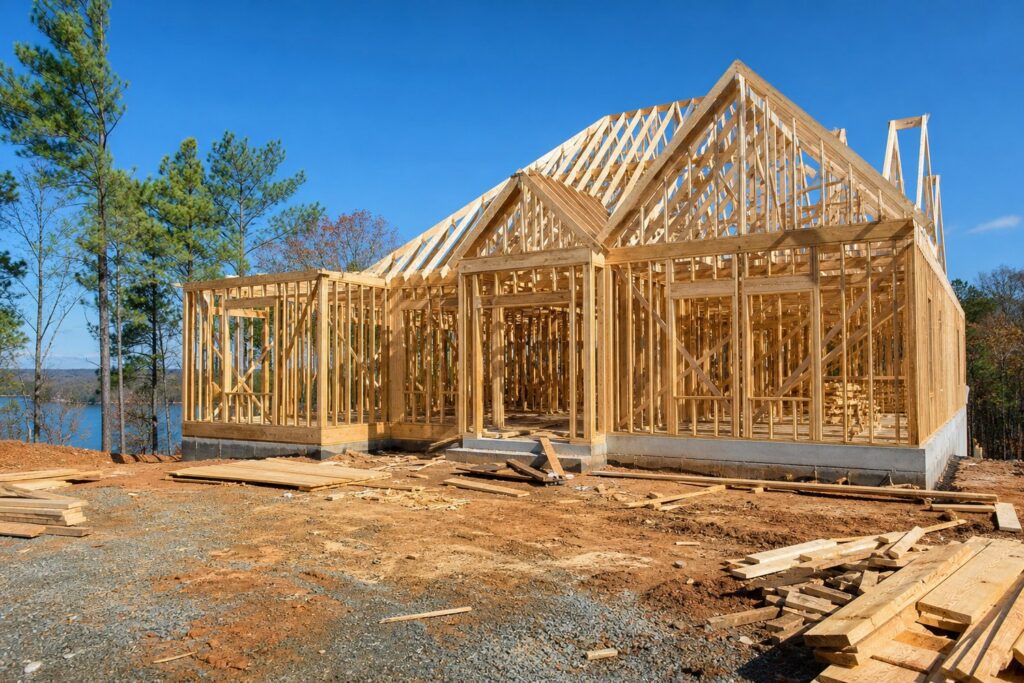

Charlotte Renovation vs. Moving With a 3% Mortgage
Start by naming the one problem a move would solve. If a remodel can fix it, you keep your 3% loan and skip the replacement rate. If the problem is the lot, the location, or something structural you can’t change, moving may still win. Get project bids before you compare anything.
Charlotte Renovation vs. Moving With a 3% Mortgage
Should you keep a 3% mortgage or move, and when does a Charlotte renovation make more sense?
If your current home can be changed to fix whatever is making you want to leave, a Charlotte renovation usually beats giving up a 3% mortgage. The national average 30-year fixed rate was 7.32% on October 22, 2026, according to Freddie Mac’s Primary Mortgage Market Survey, so replacing your loan means financing the next home at a much higher rate. Moving still wins when the real problem is the lot, the location, or a limit no remodel can change.
Key Takeaways
- Freddie Mac’s national 30-year average was 7.32% on October 22, 2026, and 7.40% a week earlier versus 6.27% a year before.
- On the same balance and the same 30-year term, principal and interest at 7.32% runs roughly 60% higher than at 3%, before the replacement home’s higher price is even counted.
- A remodel can change a home’s function, finish, and usable space, but it can’t fix a lot, a commute, flood exposure, or a street pattern.
- For any Charlotte renovation, the questions are physical before they are financial: lot area, setbacks, impervious-surface limits, utilities, and HOA approval.
- Don’t trust a renovation price range until you have project-specific bids, because structural work, finish level, permits, and design fees swing the total widely.
What does giving up a 3% mortgage actually cost you?
It costs you the gap between your current rate and today’s rate, applied to a bigger loan on a different house. That gap is the part most people underestimate when a listing looks exciting.
The rate gap on the same loan
The Freddie Mac survey put the national 30-year average at 7.32% on October 22, 2026. A week earlier it was 7.40%, compared with 6.27% one year earlier, per Freddie Mac’s weekly rate release. That’s a national benchmark, not a quote for a Charlotte borrower, so your lender’s number will differ.
Here’s the math that matters. Take the same loan balance over the same 30-year term. Principal and interest at 7.32% comes out roughly 60% higher than at 3%. That’s pure amortization, and it ignores everything else about the new purchase.
The replacement home is the second layer. It will likely cost more than what you have now, so the loan is bigger, and taxes, insurance, and any HOA dues change too. Your real 3% balance and remaining term come from your mortgage statement, not from a rule of thumb.
What changes if you renovate instead of move?
Your existing loan stays put, and you add the cost of the project. That doesn’t mean renovating is free of financial trade-offs. Any money you borrow for the work is generally priced at current rates, so you need to run that payment too and confirm the details with your lender.
| Factor | Renovate in place | Sell and buy |
|---|---|---|
| Rate on your existing balance | Stays at your current rate | Replaced by a new loan at the rate available when you buy |
| New borrowing | Project amount only, if you finance it | The full replacement loan |
| Transaction costs | Design, permit, and contingency costs instead | Selling costs, buying costs, and moving expenses |
| Living situation | Construction disruption, possibly temporary housing or storage | One move, plus the search and timing risk |
| Layout fit | Tailored to how you live, within the limits of the lot | Limited to what’s on the market |
| Location, lot, and street | Unchanged | Can change |
A move also takes cash up front. If you haven’t mapped that out, my breakdown of how much cash it takes to buy a home in Charlotte is a good place to start before you commit to the move side of the comparison.
In my experience, a 3% loan is worth protecting. I’d never push you out of it just because a new listing looks good, and in the right situation a remodel is the smarter play. The right answer depends on what problem you’re solving.
How do you know if a Charlotte renovation can solve your problem in South Charlotte or Ballantyne?
You know when you can name the specific problem and a design professional confirms the house and lot can physically accommodate the fix. Start with the problem, not the budget.
Which scope of work are you actually considering?
Renovation decisions fall into three scopes, and the cost and risk climb with each one:
- Cosmetic work: paint, flooring, lighting, fixtures, and cabinet refinishing.
- Reconfiguration: kitchen relocation, bathroom additions, wall changes, and improved circulation.
- Structural expansion: additions, second stories, garage conversions, and major exterior changes.
If your frustration is dated finishes or a choppy layout, you’re in the first two buckets, and a Charlotte renovation often makes the move unnecessary. If you need real square footage, you’re in the third, and feasibility becomes the whole question.
What are the feasibility questions that come before money?
Before you price anything, get answers to these:
- Is there enough lot area for an addition?
- Do setbacks or impervious-surface limits constrain the footprint?
- Can the existing utilities, HVAC, electrical service, drainage, and foundation support the work?
- Does your HOA require architectural approval?
These answers vary by municipality and by subdivision. A project in Ballantyne and one just across the line in Indian Land answer to different permitting authorities, so confirm requirements for your exact address with a contractor, architect, engineer, and the local permitting office.
How do you compare a remodeled home to its neighbors?
Treat Ballantyne and South Charlotte as micro-markets, not one uniform market. Compare your home with nearby properties of similar age, lot size, HOA restrictions, and finished square footage, not with a metro-wide median. That comparison tells you whether the finished product fits the block, which matters if you ever sell.
This is the kind of analysis I run with my clients before they sign a design contract. The Charlotte Life Team covers South Charlotte, Ballantyne, Weddington, Waxhaw, SouthPark, Providence, and Indian Land, so we can look at both sides: what your home may be worth after the work and what a replacement would cost in the same area.
When does moving still make more sense than a Charlotte renovation?
Moving makes more sense when the thing you want to change is the thing a remodel can’t touch. A renovation changes the house, not the ground it sits on.
A remodel can’t solve a fundamentally unsuitable lot, a location, a commute, flood exposure, or a street pattern. If those are your real reasons for leaving, spending on the interior may just give you a nicer version of the same frustration.
Renovation also carries its own risks:
- Construction disruption that can last longer than you expect.
- Uncertain scope and hidden conditions that surface once walls are open.
- Financing risk if the project grows.
- Resale constraints if you build beyond what nearby homes support.
That last one is where I see people get hurt. Overbuilding for the street can leave you with a finished home that still doesn’t match what buyers around it are paying for. I’m honest with clients when the numbers say sell, because the 3% loan is only worth protecting if the house can do its job.
What’s the step-by-step way to decide between renovating and moving?
Work through four stages in order, and don’t skip to the payment comparison until the first three are done.
- Define the problem the move would solve. Be specific: a bedroom count, a kitchen that doesn’t work, a lot you’ve outgrown.
- Get a realistic scope from a design professional or qualified remodeling contractor. I’d rather you pay for the right evaluation up front than discover a limit halfway through.
- Verify zoning, HOA, structural, and utility feasibility for your property.
- Compare the all-in numbers. Set the full renovation budget against the cost of replacing your mortgage and buying a different property at an October 2026 rate.
For step four, the all-in comparison should include:
- Your current principal-and-interest payment at 3%, plus the remaining balance and term.
- Any renovation financing and its payment.
- Property-tax, insurance, and HOA changes.
- Temporary housing or storage if you can’t stay in the home.
- Design fees, permit costs, and a contingency.
- Expected maintenance.
- The likely purchase price and loan on a replacement home.
I won’t hand you a renovation price range here, because costs in South Charlotte and Ballantyne vary widely with structural work, finish level, permitting, site access, and whether you stay in the house during construction. Only project-specific bids give you a number you can trust. Once you have them, I’ll sit down with you and run the move side of the comparison so you see both paths on the same page.
Curious how past clients feel about working with me? You can read my Google reviews.
FAQ
Should I keep my 3% mortgage and renovate instead of moving in Charlotte?
If a renovation can fix the problem that’s pushing you to move, keeping the 3% loan is often the stronger financial path. Your existing low-rate debt stays in place, and you avoid the move itself. If the problem is the lot, location, or commute, a remodel won’t solve it, and you’ll need to weigh a move on its merits.
How much more could my payment be if I replace a 3% mortgage with a 2026 mortgage?
On the same balance and the same 30-year term, principal and interest at the 7.32% national average (Freddie Mac, October 22, 2026) runs roughly 60% higher than at 3%. Your real number depends on your balance, term, credit profile, down payment, and the price of the replacement home, plus taxes, insurance, and HOA dues. Ask your lender for a personalized quote.
Is renovating in Ballantyne cheaper than buying a larger home in South Charlotte?
It depends on the scope of the project and the home you’d buy, and you can’t answer it without bids. Compare the all-in renovation budget, including design, permits, contingency, and temporary housing, against the cost of replacing your mortgage and buying a different property. I’ll walk you through both sides.
Can I add a bedroom, bathroom, or second story to my South Charlotte home?
Sometimes, but it depends on your lot, setbacks, impervious-surface limits, the home’s structure and utilities, and your HOA’s architectural rules. These vary by municipality and subdivision, so have a contractor, architect, or engineer evaluate your property and confirm requirements with the local permitting authority before you plan around the idea.
When does a renovation become too expensive for the neighborhood?
It becomes too expensive when the finished home outstrips what comparable nearby properties support. Compare your home with nearby properties of similar age, lot size, HOA restrictions, and finished square footage, not a metro-wide median. I can pull that comparison for you before you commit to a design.
The core question isn’t whether a 3% mortgage is worth keeping, it’s whether your current home can be made to work. If it can, a Charlotte renovation protects that loan. If it can’t, moving may be the right call, and you’ll want the numbers to prove it. That’s exactly what I walk my clients through, and The Charlotte Life Team can run both sides of the comparison with you.
Book a call with me to talk through your situation, or call or text me at 803-445-6998.
Equal Housing Opportunity. Carin Miller, NC #287376 | SC #95417. This article is general information, not legal, tax, or financial advice. Confirm your own numbers with your closing agent, tax advisor, or lender.